DOCXTXTConvert List to Excel
Convert or load into calculation
→
PDFExtract List from PDF
Create a list from drawings
01
1. Prepare the Excel template
Download the blank parts-list Excel template from Cutting Calculation. Fill in label, material, length and quantity, then drop the completed .xlsx file into Upload parts list. If you do not have an Excel file, open the highlighted Paste a text list section and paste the rows directly.
Use Convert List to Excel for a Word (.docx) or TXT (.txt) list. Use Extract List from PDF for drawing PDFs. Both tools can download an Excel output or send the detected rows directly to the calculation with Load into Calculation.
Convert List to ExcelExtract List from PDF
DOCXTXT→XLSX
Download ExcelLoad into Calculation
03
3. Review the detected parts
After reading, the page shows row count, total quantity and material groups. Compare label, material, length, quantity and angle columns. Correct a cell directly in the table or delete an unwanted row. Pay particular attention to length and quantity not being reversed.
Enter project name, stock length and kerf. Minimum reusable remnant determines which leftovers are retained as stock. Enable I will use available stock when required and upload the stock list. Change Advanced Settings only when your machine conditions require them.
Basic settings
✓I will use available stock
05
5. Start calculation
Select Calculate. The planner evaluates quantities, kerf, physical capacity and available stock together. During busy periods your job is placed in a safe queue; keep the page open to follow its progress.
Calculate
Finding the best cutting plan%72
Your job remains safe in the queue during busy periods.
06
6. Send the result to production and purchasing
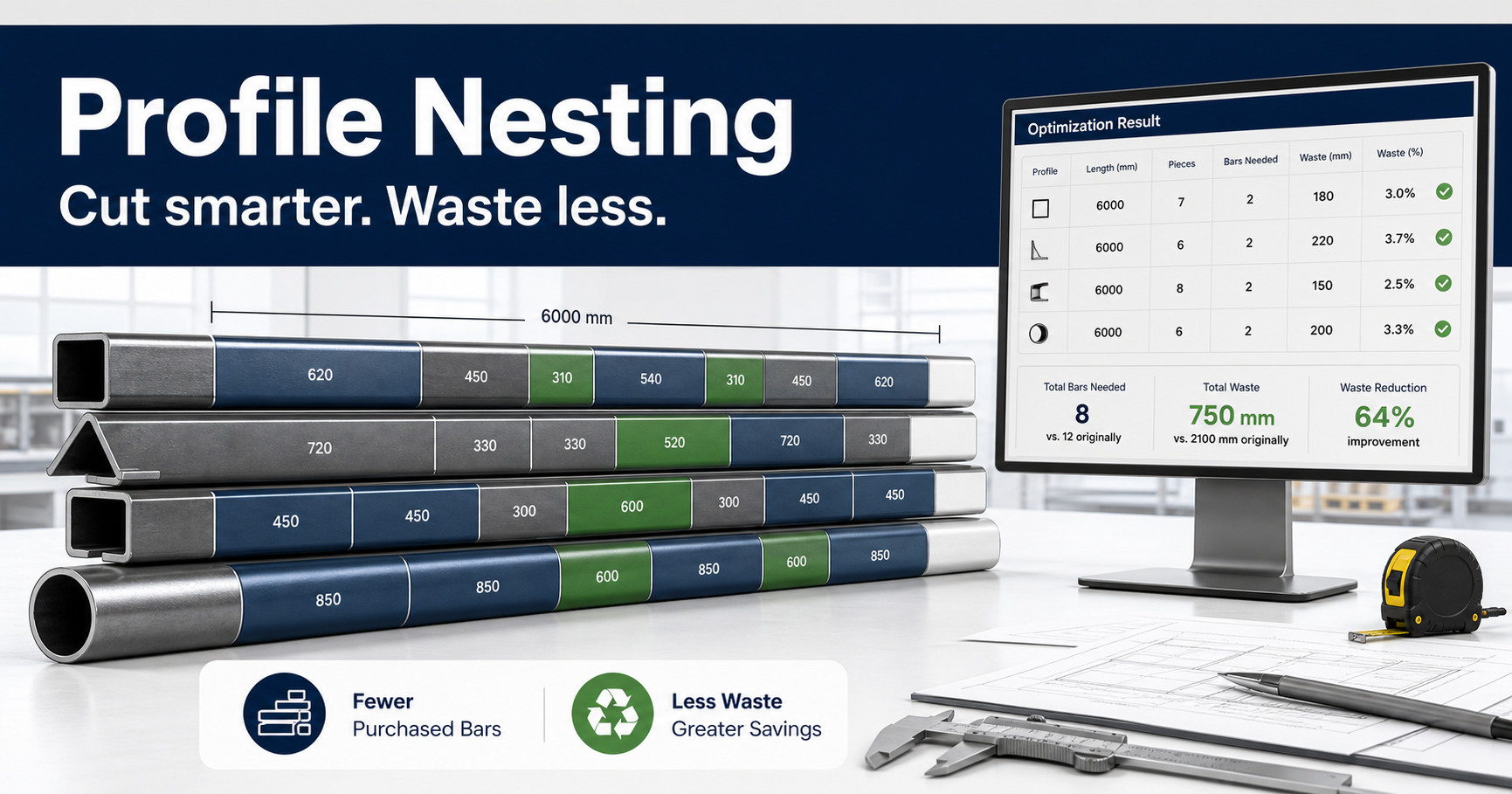
The result shows bars to purchase, stock usage, waste, reusable remnants and efficiency. Download Detailed Cutting Plan PDF for the operator and Detailed Pattern List Excel for grouped patterns. Move full-length requirements to the purchase list and create the Purchase Request Excel file.